What to Look for in an RV Storage Facility (And What Makes One Actually Worth It)
If you’ve invested in an RV, finding a place to store it isn’t just about finding an empty parking space. You want somewhere that’s convenient to get to, easy to maneuver in, secure enough to give you peace of mind, and designed to protect your RV from the realities of Florida weather.
And because every RV owner uses their rig differently, there isn’t one feature that matters most to everyone. Maybe you’re a snowbird who leaves your RV stored for several months at a time. Maybe you take weekend trips every few weeks. Maybe your RV is simply too large for your driveway — or you don’t want it sitting outside your house year-round.
Whatever your situation, there are a few things worth considering before choosing a storage facility.
1. Protection From the Florida Elements
Let’s start with the obvious: Florida is hard on vehicles.
Sun, heat, rain, humidity, and storms all contribute to wear over time. Long-term UV exposure can contribute to fading and deterioration of exterior finishes, vinyl, rubber, seals, awnings, and other materials. Repeated rain and moisture can also create additional maintenance concerns, particularly if your RV has aging seals or areas vulnerable to water intrusion.
That’s why covered storage is worth considering, particularly for an RV that’s going to spend significant amounts of time sitting.
A roof doesn’t make an RV weatherproof, and covered storage isn’t the same as enclosed storage. Wind-driven rain can still reach an open-sided space. But reducing direct exposure to Florida’s intense sun and overhead rainfall can be a meaningful advantage over leaving an RV completely uncovered.
Look beyond the word “covered.” If you’re comparing facilities, take a look at the actual structure:
- How much roof coverage is there?
- How far does the roof extend beyond the RV?
- Are there substantial overhangs?
Those details can make a difference.
2. Room to Actually Get Your RV In and Out
This is one of those things that sounds obvious until you’re trying to maneuver a 35-foot RV into a tight storage space. Access matters. A lot.
A storage facility can have the perfect parking space, but if the roads are narrow or the turns are difficult, getting in and out can become a chore.
When touring a facility, pay attention to:
- Lane width
- Turning radius
- Space between storage bays
- Clearance around corners
- Whether pull-through spaces are available
- How easily you can enter and exit with your particular RV
And don’t be afraid to actually think about your RV’s dimensions. The easiest storage space to access is the one you’ll be happy to use regularly.
3. Security
An RV represents a significant investment, so naturally, security should be part of the conversation.
When comparing facilities, ask what security measures are in place:
- Gated access
- Cameras
- Lighting
- Controlled entry
- Property management and regular maintenance
No storage facility can guarantee that theft or damage will never happen. But a well-managed property with appropriate security measures can provide an important additional layer of protection. It’s also worth checking your RV insurance policy to understand what’s covered while your vehicle is in storage.
4. Convenience Between Trips
Here’s something that’s easy to overlook when you’re focused on price: how much work is it going to take to use your RV?
If every trip starts with moving the RV, getting it ready, dealing with waste, washing it, and preparing everything at home, storage can become another item on your weekend to-do list.
Convenient amenities can make a difference. For RV owners, that might include:
- A dump station
- A wash area
- Power availability
- Easy access to the storage space
- Adequate room for preparing the RV before a trip
The more of those things you can handle at the storage facility, the fewer extra stops you may need to make.
5. The Location
Storage that’s 30 minutes closer might not sound like a huge deal. Until you’ve made that drive 20 times.
Think about where you live, where you typically travel, and which highways you’ll use when heading out. For RV owners in Southwest Florida, convenient access to major roads can make a noticeable difference — especially when you’re towing or driving a larger rig.
A good location isn’t necessarily the closest facility. It’s the one that fits naturally into the routes you already travel.
6. The Size of the Space
Not every RV needs the same amount of room. A compact travel trailer and a large Class A motorhome obviously have very different storage requirements.
Before renting a space, know your RV’s:
- Overall length
- Width
- Height
- Slide-out dimensions
- Awning clearance
- Hitch or rear-extension requirements
And remember that the listed storage-space dimensions aren’t the only thing that matters — you also need enough room to safely maneuver into the space. If possible, take your RV’s actual dimensions with you when comparing facilities.
7. Think About How Long Your RV Will Sit
Your storage needs may look very different depending on how you use your RV. Someone who takes it out every weekend has different priorities than someone who stores it for six months out of the year.
If your RV is going to sit for an extended period, think more carefully about:
- Weather exposure
- Battery maintenance
- Tire condition
- Roof and seal inspections
- Pest prevention
- Interior ventilation
- Moisture control
- Insurance requirements
Storage is only one part of protecting an RV. Regular maintenance still matters, even when your RV is sitting safely under a roof.
What Makes Charlotte County RV & Boat Storage Different?
Once you know what to look for, it’s easier to evaluate a storage facility based on what actually matters — not just the monthly price. That’s where Charlotte County RV & Boat Storage stands apart.
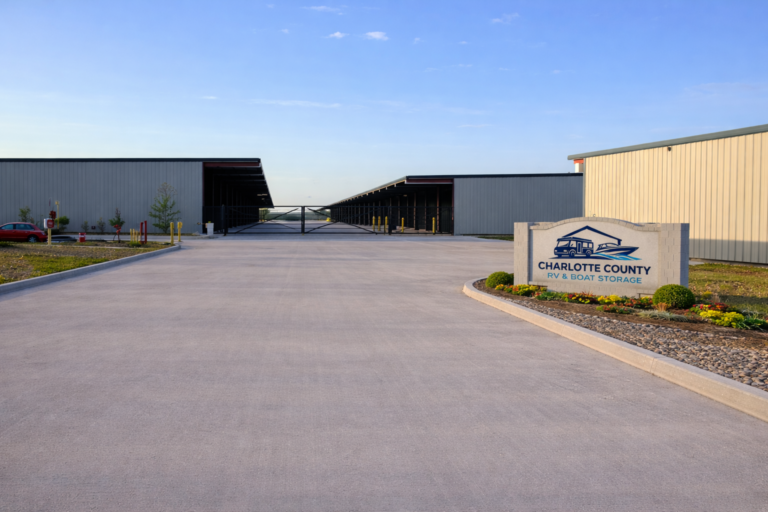
Located in Punta Gorda, the facility was designed specifically around the needs of boat and RV owners.
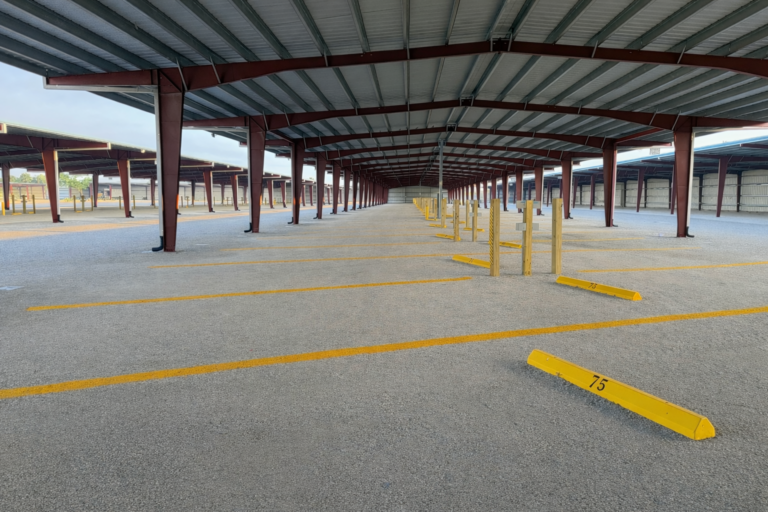
10-foot overhangs. One of the standout features is the 10-foot overhangs on the covered storage spaces. That’s more than simply saying a space is “covered” — the substantial overhang provides additional shade and overhead protection from Southwest Florida’s intense sun and frequent rainfall.
Designed for easier access. RV storage needs room to maneuver, and the facility offers wide access and pull-through options to make getting your RV into and out of storage easier.
Useful amenities. Instead of treating storage as simply a place to park, the facility includes practical amenities that RV owners can actually use, including a wash bay, dump station, and 30-amp power.
Security. The property features gated access and 24/7 security, providing an additional layer of peace of mind while your RV is stored.
Convenient location. The Punta Gorda location also offers convenient access to I-75 and US-41, making it easier to get on the road when it’s time for your next trip.
And perhaps most importantly, the facility is built specifically for boats and RVs, rather than treating them as an afterthought alongside traditional self-storage.
Storage Should Make RV Ownership Easier
The best storage facility isn’t necessarily the one with the lowest monthly price. It’s the one that makes sense for your RV, your travel habits, and your priorities.
You want protection from the elements. You want room to maneuver. You want reasonable security. You want convenient access. And if you’re going to store your RV regularly, amenities that make preparing for your next trip easier can be worth their weight in convenience.
That’s the standard worth looking for. And for RV owners in Punta Gorda and the surrounding Charlotte County area, Charlotte County RV & Boat Storage was designed with those considerations in mind.
Ready to find the right storage for your RV? Learn more about Charlotte County RV & Boat Storage or call (941) 867-6800.
Store it well. Then get back to using it.