Living near Charlotte Harbor, you’ve probably got a good reason to own a boat. Where it sits when it’s not on the water is a different question, and the answer can affect how much time you spend enjoying it versus maintaining it.
Not all boat storage is the same, and the right choice depends on your boat, your habits, and your budget.
Whether you’re looking for covered boat storage in Punta Gorda, a place to keep your boat and trailer between trips, or simply trying to decide whether off-site storage makes sense, here’s what is worth checking before you sign anything.

1. Covered or uncovered?
This is usually one of the first decisions.
Southwest Florida’s sun, heat, rain, and humidity are part of life here, and prolonged exposure can contribute to wear on things like upholstery, canvas, finishes, and other exterior components.
An open storage space may be the right choice for some owners, but your boat is exposed directly to the weather. Covered storage provides a roof over the boat and can reduce direct exposure to sun and rainfall.
If you’re looking at covered options, ask how the covering actually works.
- How far does the roof extend?
- Will your entire boat fit underneath it?
- What are the height limitations?
- Will a tower, T-top, or bimini fit?
- Are there overhangs that provide additional protection?
A roof is only helpful if your boat actually fits comfortably beneath it.
2. Will your boat and trailer actually fit?
Before you tour a facility, know your numbers.
For a boat stored on a trailer, measure the complete combination rather than just the boat itself. Consider:
- Overall length
- Beam or overall width
- Trailer length
- Height
- Hitch and other attached equipment
- Anything that remains attached while the boat is stored
Your storage space needs to accommodate the entire setup within its designated boundaries.
This is one reason it helps to measure before you start comparing facilities. Our guide to choosing the right RV or boat storage size walks through the measurements you’ll want to have ready before renting a space.
And don’t forget maneuverability. A space may technically be long enough, but you still need to be able to enter, turn, and position your boat and trailer safely.
3. How easy is access?
Think about how you actually use your boat.
Do you head out early on Saturday mornings? Make quick trips after work? Take the boat out several times a week during the summer?
Ask about access hours and how entry works. Do you have your own access code? Do you need to schedule a visit? Are there restrictions on when you can pick up or return your boat?
Location matters, too.
A storage facility that is reasonably convenient to the waterways you use most can make a difference when you’re towing a boat. Less time spent driving with a trailer means more time available for the actual trip.
4. What about security?
Boats, trailers, motors, and fishing equipment can represent a significant investment, so ask what security measures are actually in place.
Questions worth asking include:
- Is the property fenced or gated?
- Is access controlled?
- Is there camera coverage?
- Is the property illuminated?
- Who has access to the facility?
- Is access available outside of office hours?
Every facility is different, so look for specifics rather than assuming a facility is secure simply because it is advertised as storage.
5. Can you rinse the boat?
If you boat in saltwater or brackish water, rinsing your boat and trailer after use is an important part of regular care.
Salt and other residue can accumulate on the hull, trailer, hardware, and other components. Having access to a wash bay at your storage facility can make it easier to rinse the boat soon after you return instead of adding another stop to the trip home.
Ask whether wash access is available, what equipment is provided, and whether there are any rules about when or how you can use it.

6. Is power available?
Some boat owners want electrical service for battery maintenance or other equipment.
If that matters to you, ask exactly what is available and how it is provided.
At Charlotte County RV & Boat Storage, 30-amp metered electrical service is available on select spaces and billed separately according to usage. Availability depends on the specific space, so ask about electrical service when comparing your options.
7. What are the rules about working on your boat?
Some owners like to perform basic maintenance themselves. Others simply want a place to park the boat between trips.
Before renting, ask what the facility allows.
That might include questions about:
- Washing
- Minor maintenance
- Repairs
- Working on engines
- Storing extra equipment
- Using electrical service
- Leaving covers or other equipment in place
Policies vary from one facility to another. Knowing the rules ahead of time can prevent an unpleasant surprise later.
8. What’s the plan for hurricane season?
Hurricane season is a particularly important consideration for boat owners in Southwest Florida.
Ask the storage facility what its storm procedures are, what it expects owners to do, and how it communicates with customers when severe weather is approaching.
If your boat is trailerable, also think through your own storm plan. The Florida Fish and Wildlife Conservation Commission recommends hauling a trailerable vessel out of the water and moving it to a safe location as far from tidal waters as possible when a storm threatens.
No storage facility can make a boat completely storm-proof, and covered storage should not be treated as a guarantee against hurricane damage.
The important thing is to understand your options and have a plan before a storm is approaching.
9. What does the contract say?
The monthly price is only one part of the decision.
Read the storage agreement before signing and look for things such as:
- Length of the rental term
- How rates can change
- Notice required before leaving
- Additional fees
- Electrical charges
- Insurance requirements
- Rules about maintenance or washing
- Access policies
- What happens if your boat doesn’t fit within the rented space
If something is unclear, ask before signing.
Comparing facilities on the terms of the agreement—not just the monthly rate—can give you a much better picture of what you’re actually paying for.
10. Does it pass the walk-through test?
Visit the facility in person if you can.
Look at how well the property is maintained. Pay attention to the condition of the roads and storage areas, how easy it appears to maneuver a trailer, how well the property drains after rain, and whether the layout makes sense for the size of your boat.
Notice how staff answer your questions, too.
A facility should be willing to clearly explain its storage sizes, access procedures, security measures, amenities, and rules before you rent.
Questions to Ask Before You Choose
| What to look at | Why it matters | Question to ask |
|---|---|---|
| Coverage | Sun and rain can contribute to wear | Will my boat’s full length and height fit under the cover? |
| Size limits | Not every space fits every boat and trailer | What are the maximum length, width, and height? |
| Access | Your schedule may not match the facility’s | What are the access hours, and how do I enter? |
| Security | Boats and equipment are valuable | What security measures are in place? |
| Wash-down | Salt and grime can accumulate | Is there a wash bay, and how does it work? |
| Power | Some owners need electrical service | Is electrical service available for my space, and what does it cost? |
| Storm policy | Hurricane season requires planning | What do you do, and what do I need to do, when a storm approaches? |
| Contract terms | The agreement affects your overall cost | How are rates and fees handled, and how much notice is required to leave? |
| Maintenance rules | Facilities have different policies | What maintenance or repairs are allowed on site? |

A Look at What We Offer
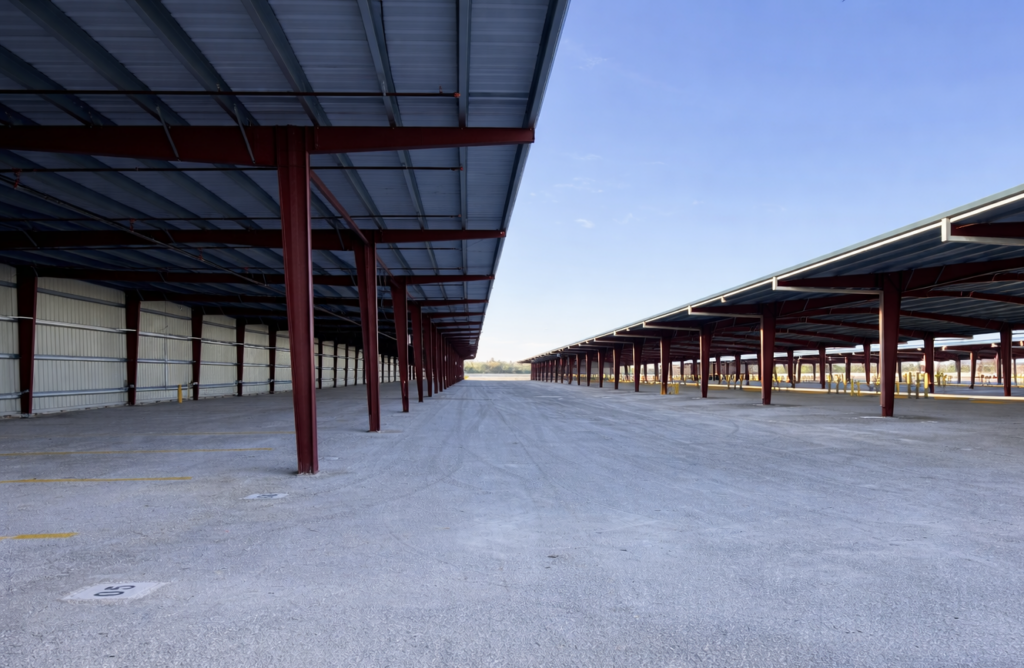
If you’re comparing boat storage options in Punta Gorda, Charlotte County RV & Boat Storage is now open with covered storage designed for boats, RVs, and trailers.
The facility offers covered bays with 10-foot overhangs, an on-site wash bay, dump station, air compressors, 24/7 gated access, and 30-amp metered electrical service available on select spaces.
The facility is also located with access to Tamiami Trail and I-75, making it convenient for owners throughout Punta Gorda and surrounding Charlotte County communities.
If you’re considering storage, bring your boat’s measurements and your list of questions. That’s the best way to determine whether a particular storage space is a good fit.
FAQ
Is covered boat storage worth it in Florida?
For many owners, covered storage can be a useful way to reduce direct exposure to Florida’s sun and rain. Whether it is worth the additional cost depends on your boat, how often you use it, how long it sits between trips, and your budget.
How do I know if my boat will fit?
Measure the complete setup, including the boat, trailer, hitch, width, height, and any equipment that remains attached. Then compare those measurements with the facility’s published space dimensions. If you’re between sizes, ask the facility before choosing a space.
Do I need to rinse my boat after every trip?
Many boat owners rinse their boats and trailers after saltwater use to remove salt and other residue. Your boat and engine manufacturers may have specific care recommendations, so follow those instructions for your equipment.
What should I ask about hurricane season?
Ask what the facility’s storm procedures are, what it expects from owners, and how it communicates before severe weather. If your boat is trailerable, have a plan for where you would move it if necessary. FWC recommends moving trailerable vessels to a safe location away from tidal waters when a storm threatens, when possible.
Should I store my boat at home instead?
It can work for some owners, but local regulations, HOA or deed restrictions, available space, weather exposure, security, and storm preparation are all worth considering. See our article on storing an RV or boat at home in Charlotte County for more.
What should I bring when comparing storage facilities?
Bring your boat’s overall length, beam, trailer length, height, and any measurements for equipment that remains attached. It also helps to know whether you want covered storage, electrical service, and access to a wash area.
Helpful Resources
If you’re researching boat storage, these resources can help with the parts of ownership that go beyond choosing a storage space:
- Florida Fish and Wildlife Conservation Commission: Storm preparation resources for boat owners, including guidance on moving trailerable vessels before severe weather.
- Florida Fish and Wildlife Conservation Commission: Boating safety, regulations, education, and other boating resources.
- Your boat and engine manufacturer: Follow the manufacturer’s recommendations for cleaning, maintenance, battery care, storage, and winterization or long-term storage procedures.
- Your insurance provider: Ask how storage location, storm preparation, and your specific policy affect coverage.